Mapping, the look made to measure
Why do two clients with the same lash set never get the same result? Because the real work is not applying lashes, it is thinking the look through beforehand. That is mapping.
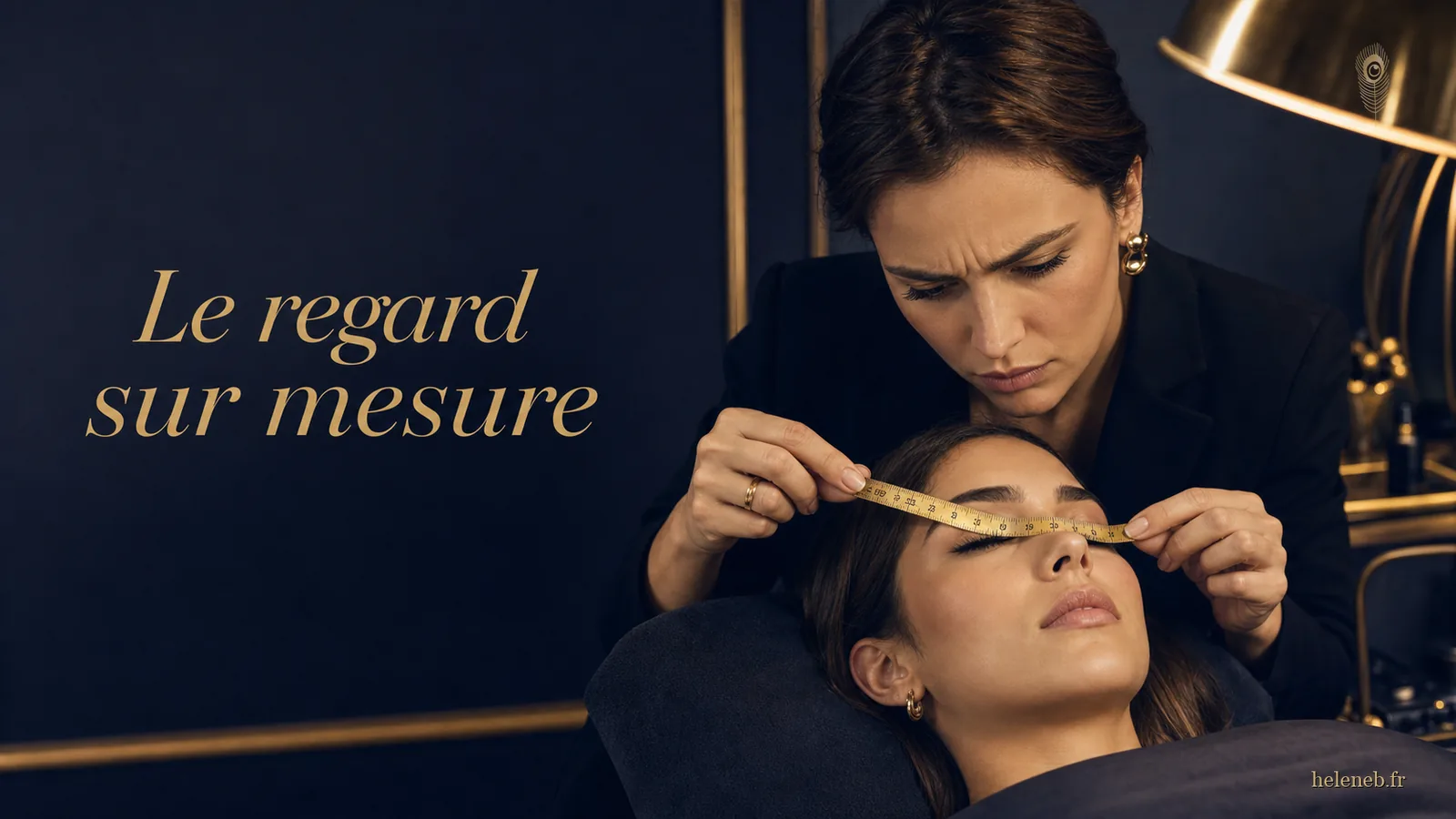
We often imagine that a lash set is just gluing on longer lashes, everywhere, the same. That is wrong, and that is exactly where the craft hides. Before placing the first lash, a technician draws up a plan, length by length, curl by curl. This plan has a name, mapping. And it is what turns a pretty set into a look designed for that particular client.
- Mapping is the map of lengths and curls defined before applying.
- It adapts the result to the shape of the eye and to the desired effect.
- Four main effects, natural, doll eye, cat eye, fox eye, and endless nuances in between.
What mapping really is
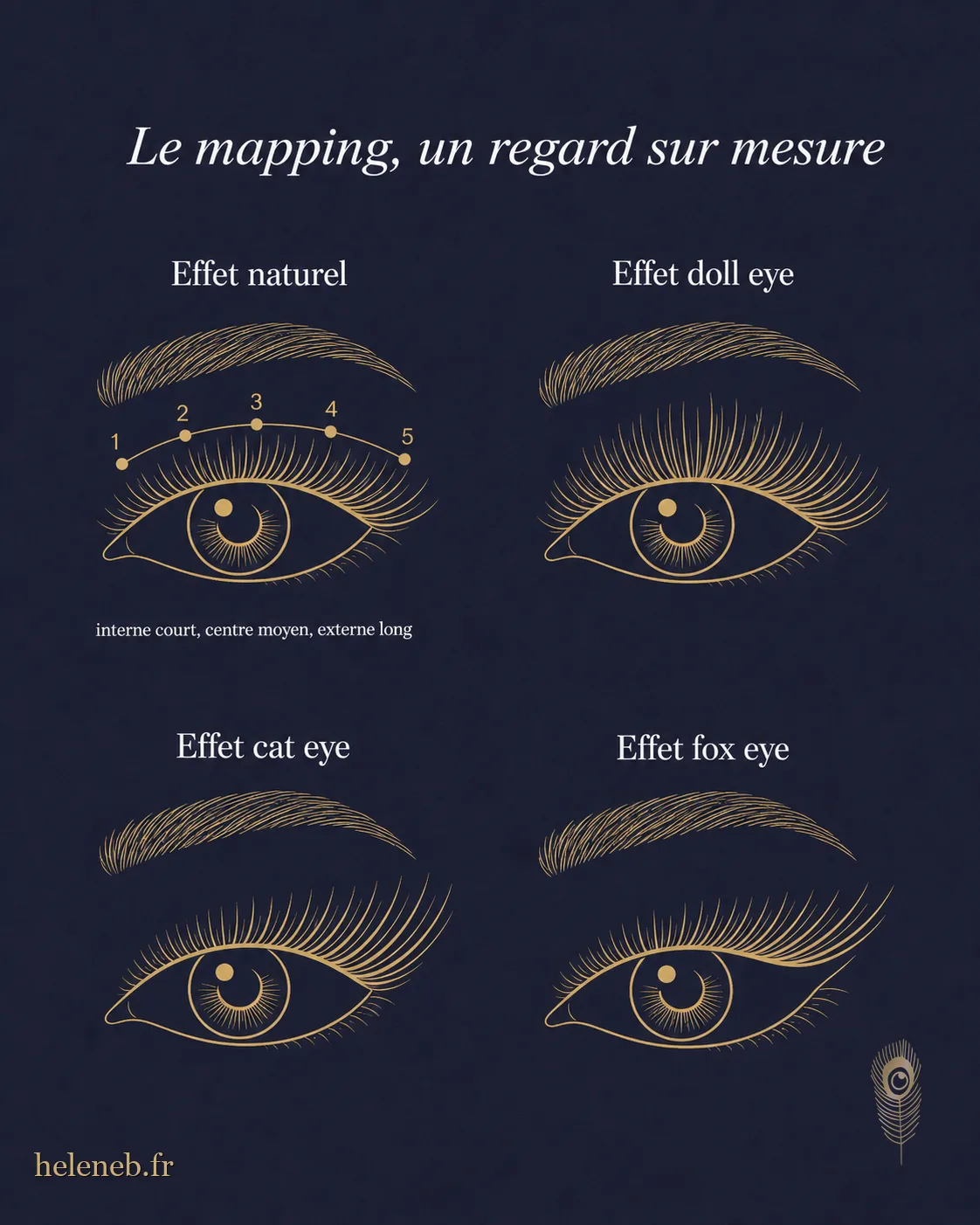
Mapping is the placement plan. The technician mentally divides the eyelid into zones, from the inner corner to the outer corner, and decides for each zone which length and which curl of extension to apply. The basic principle every beginner learns first is short inner, medium centre, long outer. It is the starting point, the one that respects the natural growth of the lash and will never be a mistake.
Why we personalise
Because no two looks are alike. A round eye, an almond eye, a downturned eye, close-set or wide-set eyes, are not enhanced by the same plan. Applying the same thing on everyone means missing what makes a set flattering. Mapping is what separates a technician who executes from a technician who draws a look.
The four reference effects
The natural effect follows the line of the eye, with progressive lengths and no break. The result wakes up the eye without transforming it. The doll eye places the maximum lengths in the centre of the eye, which opens and rounds the look, ideal for enlarging. The cat eye concentrates the lengths toward the outer corner, which stretches the eye and gives that elongated feline look. The fox eye pushes the lifted effect outward, for a pulled doe-eyed look, very much in demand.
“A technician who masters her mapping does not apply lashes. She draws a look.
Adapting the mapping to eye shape
This is where the expert eye makes the difference. On a round eye, you avoid the doll eye that rounds it even more, you prefer to stretch. On a downturned eye, you lift the outer corner to open it. On close-set eyes, you elongate outward to create space. Mapping is not a fixed recipe, it is a reading of the face before the gesture.
Mapping in one sentence
You do not apply a longer look. You apply the right look, the one that flatters this precise client, based on a reading of her eye shape and a plan drawn before the first lash.
Mapping can be learned, and it changes everything
It is one of the skills that sets a trained technician apart from a self-taught one. Reading a face, choosing the right effect, drawing the plan, all of this is passed on and corrected, a trainer's eye on your first mappings. It is exactly what makes a client leave feeling beautiful, and come back. Independent, yes. Alone, never.
Hélène B
Trained within a world-renowned international brand. 13 years of experience in lash extensions, including 10 years as a trainer, and more than 500 technicians trained in France and abroad.
Learn to draw the look
Our classic and Russian volume trainings, with mapping taught step by step and the support of a trainer. Independent, yes. Alone, never.
Discover the trainings